
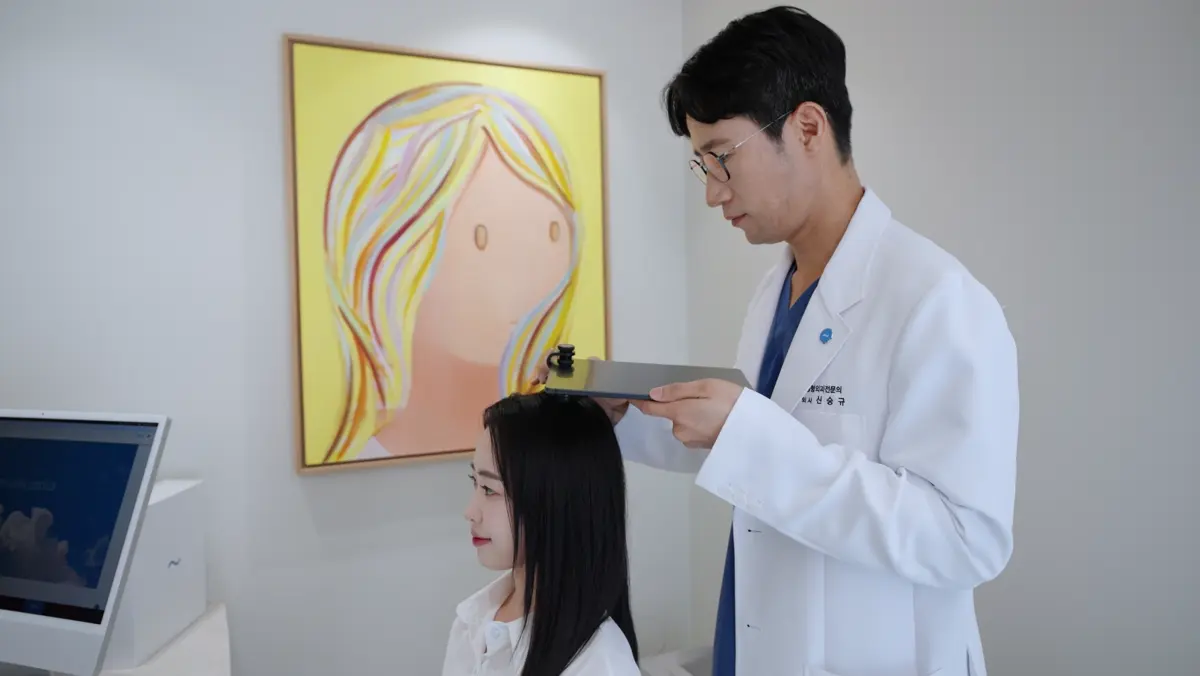
By repeating that process, a hair transplant surgeon is slowly completed.
Dense yet Natural
Hairline transplantation is truly difficult. If you try to make it look natural, it can appear somewhat sparse; if you try to fill it densely, it can easily look artificial. Patients, understandably, want both. “Dense yet natural” is perhaps the most obvious request, but also the most difficult.
Finding the answer little by little
That intersection cannot be found all at once. You plant a bit more, plant a bit less, arrange fine hairs and thick hairs differently, and adjust angles and directions little by little to find it. But hairline transplantation is not a surgery where you can immediately check the correct answer. The transplanted hairs must grow, lengthen, and only after a long time become a real hairline.
So you look at one result, learn from it, change a bit in the next surgery, and check the result again a year later. Repeating that process slowly shapes a hair transplant surgeon. Before you know it, it has been over a decade focusing only on hairline correction. The point where density and naturalness meet. I do not think one must give up either.
It is not easy, but it is not impossible.
Bleeding, infection, scarring, folliculitis, temporary accompanying shedding, and other complications may occur after hair transplantation. There may be limits to density and naturalness depending on the original hair’s thickness and direction and the donor supply from the occipital region.