
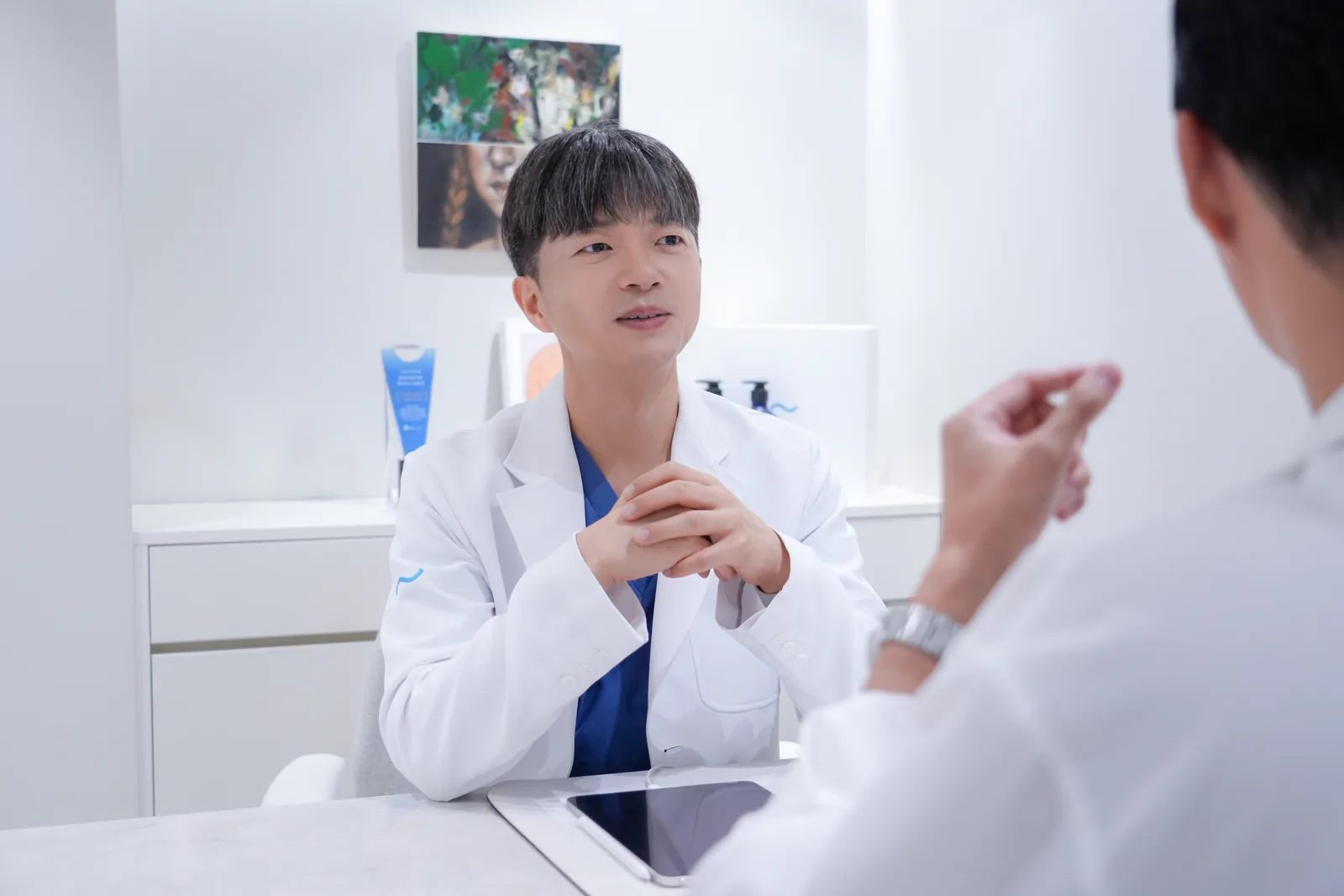
It is not about deciding which method is better, but about finding which method is better for me.
You don't need to insist on just one and give up another excellent option
One is not universally superior to the other. Each has advantages and disadvantages, and they are complementary methods where the more appropriate choice depends on the situation. You can compare them to a knife and scissors. The goal is the same — to cut what’s needed — but depending on the situation one tool can be more efficient. There is no need to give up one excellent method.
Rather than a 'good method', find the method that fits me
When deciding between incisional and non-incisional approaches, we don't look at a single condition. We consider scalp elasticity, the thickness and density of donor hair at the back of the head, the amount of grafts needed, and what technique was used previously. Some patients care more about maintaining back-of-head volume, while others absolutely do not want a linear scar. For some, recovery time or pain sensitivity is the priority; for others, reliably securing a large number of hairs is more important.
Therefore, even if the same number of grafts are transplanted, the recommended method can differ from person to person. The goal is not to determine which method is universally better, but to find which method is better for me.
We recommend non-incisional when:
We favor the non-incisional approach when scalp elasticity is poor, when the patient has already had multiple incisional surgeries, when there is a strong fear of incisions, when the patient is sensitive to pain, or when the patient dislikes the idea of a linear scar.
We recommend incisional when:
We favor the incisional approach when the back of the head is flat or lacks density such that volume needs to be restored, when the patient has already had multiple non-incisional procedures, when lying prone for long periods is difficult, or when cost is a significant concern.
Bleeding, infection, swelling, scarring, folliculitis, sensory changes, temporary shock loss (concurrent loss) or less-than-expected graft survival may occur. Preexisting hair loss can continue after transplantation, so long-term management is necessary.